
dvLED for Broadcast and Events
On air, the dvLED wall is judged by the camera, not the eye. Perfect synchronization, low latency and even, homogeneous light are what keep a set looking right through every shot, every night.
What this room demands
On camera above all
The dvLED wall has to look flawless through the lens, where the smallest sync or color error is obvious.
Low latency
Live production leaves no room for lag between source and screen.
Even, homogeneous light
A set dvLED wall has to be uniform edge to edge, with no patches, banding or hotspots on camera.
Serviceable between shows
A studio runs on a schedule. Front service modules and ERMAC diagnostics for every cabinet mean a fault is found and fixed between broadcasts, not during one.
Broadcast dvLED that holds up on camera, take after take
TRUE broadcast sets are XF+ panels on the ERMAC control system. Synchronisation to the production clock, low latency and edge to edge uniformity are set in one calibrated system, and Pantone validated color means skin tones and brand graphics read correctly through the lens.
Synchronized and low latency
The ERMAC SPU-32 takes SDI and ST 2110 directly and keeps the dvLED wall synchronised to the production clock with low latency, so nothing tears when the camera moves.
Pantone validated color
Color that reads correctly on camera, held across brightness and across batches.
Uniform edge to edge
Every LED batch is measured and compensated inside the display by the Color Space Engine, so brightness and color match across every panel, with no patches or banding on camera.
From 0.6 to 2.5
The right pitch for close set dvLED walls or wide backdrops, from 60 Hz up to 240 Hz.
Where it earns its place
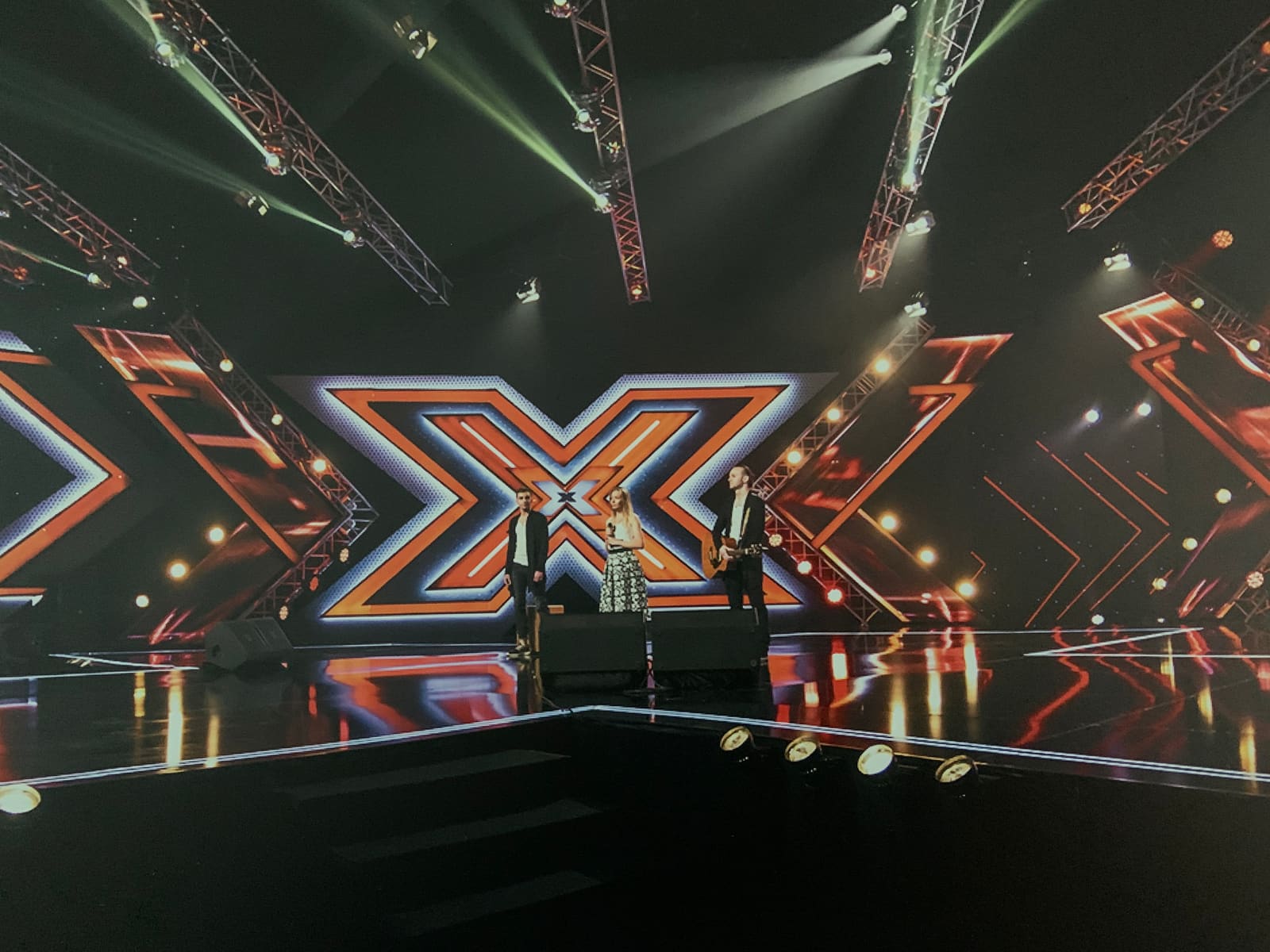
TRUE dvLED walls have carried prime time formats such as The Voice and Big Brother, news production, and live sport including UEFA and Adidas activations. On camera the same holds: in side-by-side shootouts TRUE dvLED walls measured highest in color accuracy and homogeneity.
Measure it before you decide
The fastest way to judge a dvLED wall is to measure it. Book a visit to our Experience Center, or send us your space and we will size it.
Broadcast and Events questions
What makes a dvLED wall suitable for broadcast?
On air, the key factors are synchronization, low latency, color that is correct on camera, and a homogeneous surface. TRUE tunes the ERMAC control system and the XF+ panels together to hold all of these under the lens.
How does TRUE keep the set uniform on camera?
Strict component selection and end to end calibration keep brightness and color even across the whole dvLED wall, so there are no visible patches or banding when the camera moves.
Which pitch is right for a studio set?
It depends on how close the camera and talent get to the dvLED wall. TRUE covers 0.6 to 10 mm and above and helps size the right pitch for your set during planning.